SOUTH CAROLINA INTERACTIVE FIELD MAP
Inspect places, geology, access evidence and nearby context
The map keeps collecting leads, protected places and research occurrences visually distinct.
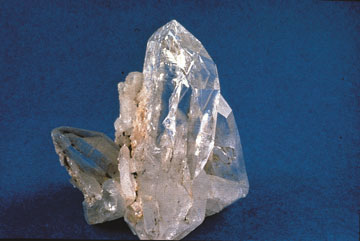
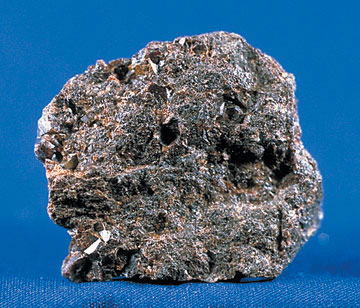
Rock and mineral reference images for South Carolina
These are real reference photographs from the site media library, not photographs of the exact mapped sites. Always confirm mineral identity and collection permissions separately.

TRIP-READY SHORTLIST
Best-supported rockhounding sites in South Carolina
This ranking favors current evidence, usable coordinates, navigation context and field readiness. It is not a popularity ranking and Conditional records still require verification.
Charleston Fossil Adventures — Guided Barrier-Island Surface Hunt
naturally exposed shark teeth and other marine/terrestrial fossils on guided barrier-island shorelines
Diamond Hill Mine — Public Crystal Dig
native/unsalted quartz crystals including amethyst, smoky quartz, skeletal quartz; associated beryl, garnet and epidote
Francis Marion National Forest — Casual Mineral Collecting
common rocks/minerals and Coastal Plain geologic samples where lawful
SCIAA Hobby License — Submerged Fossil Hand Collection
exposed submerged fossils and qualifying artifacts recovered by hand
South Carolina Public Beach Fossil Surface Collection
naturally exposed shark teeth, fossil bone and other beach-wash fossils
South Carolina State Forests — Manager Permission Check
rocks/minerals on Forestry Commission lands
Sumter National Forest — Casual Mineral Collecting
small quantities of common rocks/minerals; possible recreational prospecting contexts
SOUTH CAROLINA MINERAL DISCOVERY
What can you find rockhounding in South Carolina?
The atlas mixes visitor programs, stronger collecting leads, protected environments and geological research. Material record counts are not promises that collecting is allowed. Verify the exact location and manager before taking anything.
Identify South Carolina rocks, minerals and fossils →
Diamond Hill Quartz & Crystals
8 recordsAbbeville County's managed mine offers quartz variants on operator terms; check fees, operating days, tools and safety.
Marine Fossils & Shark Teeth
88 recordsCoastal Plain fossil teeth and shells can occur along eroding shores and waterways, with site ownership and collection laws decisive.
Carolina Slate Belt Gold
47 recordsPiedmont gold districts have historical significance, but active mineral rights and water rules govern collection.
Garnet & Piedmont Metamorphic Gems
9 recordsMetamorphic belts host garnet and epidote, frequently in private quarry and old mining contexts.
Beryl, Feldspar & Pegmatite
5 recordsCrystalline Piedmont rocks offer accessory minerals without implying an open site.
Kyanite & Industrial Minerals
2 recordsMetamorphic industrial minerals are largely geological and mine-access research.
Agate, Chert & River Gravel
6 recordsRiver transported silica and conglomerates can resemble valuable material; always confirm legitimate access.
Historic Mines & Quarry Minerals
354 recordsMany historic localities are private, closed, unstable or scientific research-only.
LAND, CLAIMS & PERMISSION
Who controls the land matters more than the mineral pin
The state map’s land-status and claim layers are planning aids. Exact ownership, claims, protected-resource rules and current manager guidance still control field use.
Diamond Hill and managed mines
Pay-to-dig operators set site access, permitted tools, fees and specimen policies; check directly before travel.
State parks and preserves
South Carolina state parks, heritage preserves and protected coastal resources generally do not provide casual rock/fossil removal rights.
Fossil and submerged activity
Riverbed and submerged fossil collecting can involve licenses, dive regulations, property boundaries and protected resource laws.
National Forest and private property
USFS land availability is not uniform. Historic gold occurrences, mines and quarries often need landowner consent or separate authorization.
Coastal safety
Tides, unstable fossil bluffs, boat traffic, wildlife and thunderstorms complicate otherwise accessible-looking collecting areas.
WHEN TO GO
South Carolina rockhounding seasonal planner
Cool-weather Piedmont season
Lower vegetation improves rock observation; coastal wind and storms remain concerns.
Spring crystal and fossil trips
Managed sites may be accessible; rain can close mine and river paths.
Humid coastal season
Heat, storms, high tides and hurricanes threaten field plans.
Autumn outdoor window
Cooler days can favor outings; review tropical weather and operator schedules.
SOUTH CAROLINA FIELD KIT
A practical field kit for South Carolina
Match equipment to the site and collecting method rather than carrying heavy tools by default.
Identification kit
Hand lens, magnet, notebook, scale, specimen bags and labels help preserve context and reduce guesswork.
River / gravel kit
Use sturdy footwear, gloves and eye protection. Check water level, access and disturbance rules before entering a stream or shoreline.
Geode / hard-rock kit
Eye protection and small hand tools are more useful than heavy equipment. Never enter mine workings or unstable cuts.
Fossil kit
Camera, scale, notebook and protective wrapping allow documentation without assuming removal is legal.
Panning kit
A basic pan, classifier and vial are enough for many recreational contexts; powered equipment can trigger different rules.
Navigation & safety
Carry offline mapping, water, weather layers and an emergency plan appropriate to remoteness and season.
COMMUNITY FIELD INTELLIGENCE
Recent South Carolina field reports
Approved visitor reports add current observations without automatically changing a location’s legal or access status.
Open any location guide and use Share Your Story & Photos. Reports remain pending until admin approval.
EXPLORE SOUTH CAROLINA LOCALLY
Rockhounding near South Carolina cities
Move from statewide discovery into nearby field regions and then into individual location guides. City pages rank nearby records by evidence status and distance instead of treating every geological occurrence as an open collecting site.
South Carolina rockhounding regions and local areas
Regional pages group related geology and field opportunities without turning every mineral occurrence into a separate destination page.
South Carolina location directory preview
Start with the current inventory, then open the complete searchable directory for all 372 records.
Diamond Hill Mine — Public Crystal Dig
native/unsalted quartz crystals including amethyst, smoky quartz, skeletal quartz; associated beryl, garnet and epidote · Abbeville
Abbeville Amethyst and Quartz Research
amethyst, smoky quartz, quartz veins and associated pegmatitic minerals · Abbeville
Abbeville County Geology and Mineral Research
bedrock, surficial geology, mineral resources, fossils and historic mining/quarry occurrences · Abbeville
Aiken County Geology and Mineral Research
bedrock, surficial geology, mineral resources, fossils and historic mining/quarry occurrences · Aiken
Savannah River Geology Research
river gravels, Coastal Plain fossils and Piedmont-derived material · Aiken / Edgefield / Allendale / Hampton / Jasper
South Carolina Kaolin Belt Research
kaolin and clay mineral resources · Aiken / Edgefield / Lexington
Savannah River Terrane Research
metamorphic and igneous terrane geology · Aiken / Edgefield / McCormick / Greenwood
South Carolina Fall Line Geology Research
transition from crystalline Piedmont to Coastal Plain sediments · Aiken / Lexington / Richland / Kershaw / Chesterfield
Allendale County Geology and Mineral Research
bedrock, surficial geology, mineral resources, fossils and historic mining/quarry occurrences · Allendale
Anderson County Geology and Mineral Research
bedrock, surficial geology, mineral resources, fossils and historic mining/quarry occurrences · Anderson
Anderson County Quartz/Amethyst Research
quartz, amethyst, beryl, garnet and Piedmont metamorphic/igneous rocks · Anderson
Iva Area Mineral Research
quartz, amethyst, beryl and associated Piedmont minerals · Anderson
Bamberg County Geology and Mineral Research
bedrock, surficial geology, mineral resources, fossils and historic mining/quarry occurrences · Bamberg
Barnwell County Geology and Mineral Research
bedrock, surficial geology, mineral resources, fossils and historic mining/quarry occurrences · Barnwell
Hunting Island State Park — Protected Beach/Geology Control
beach sediments, fossils and natural features · Beaufort
Beaufort County Geology and Mineral Research
bedrock, surficial geology, mineral resources, fossils and historic mining/quarry occurrences · Beaufort
Berkeley County Geology and Mineral Research
bedrock, surficial geology, mineral resources, fossils and historic mining/quarry occurrences · Berkeley
Francis Marion National Forest — Casual Mineral Collecting
common rocks/minerals and Coastal Plain geologic samples where lawful · Berkeley / Charleston
Goose Creek Limestone Fossil Research
Miocene limestone and marine fossils · Berkeley / Charleston / Dorchester
Santee-Cooper Basin Fossil Research
Coastal Plain fossils, limestone and river/lake sediments · Berkeley / Clarendon / Orangeburg
Calhoun County Geology and Mineral Research
bedrock, surficial geology, mineral resources, fossils and historic mining/quarry occurrences · Calhoun
Charles Pinckney National Historic Site — Protected Natural/Cultural Resources
natural and cultural resources · Charleston
Charleston Fossil Adventures — Guided Barrier-Island Surface Hunt
naturally exposed shark teeth and other marine/terrestrial fossils on guided barrier-island shorelines · Charleston
Charleston County Geology and Mineral Research
bedrock, surficial geology, mineral resources, fossils and historic mining/quarry occurrences · Charleston