Specific Gravity Tools for Gemstones & Minerals
Use density as one objective property in a multi-test identification workflow. Choose a method that matches specimen size, porosity and measurement precision.
Choose equipment from the material and job first—not from the retailer first.
How do you measure specific gravity of a gemstone?
A common method weighs a specimen in air and in water using a suitable hydrostatic setup. Accuracy depends on scale readability, specimen behavior, bubbles, porosity and technique, so specific gravity should be combined with other identification properties.
Objective evidence that complements appearance.
Specific gravity can eliminate many candidates when measured carefully.
Porosity and trapped bubbles matter.
Hydrostatic methods assume the specimen and measurement setup behave appropriately. Porous material, coatings and tiny stones can increase error.
Check the source, model and buying conditions.
Manufacturer pages and manuals support the specifications identified in a guide. Check the exact model and current instructions before purchase; similarly named variants can differ.
A product card’s check date applies to that record. The page revision date does not mean every product was rechecked. Confirm current price, seller, package contents and availability on Amazon.
These guides use published information and editorial selection criteria. Hands-on testing is not claimed unless a guide describes the actual test.
Shopping cards show products with a direct Amazon purchase link. This limits the displayed selection; it is not a comprehensive market comparison. Use the tool-class guidance and current manufacturer instructions to assess other options.
- Mineralab specific gravity kit
These references support product specifications or procedures, not independent proof of performance. Follow the instructions for the exact equipment you use.
Editorial method: read the Gear Review Methodology & Evidence Policy. Affiliate relationships: read the disclosure.
Actual weighing scales for specific-gravity measurements
Accurate mass measurement is one component of the hydrostatic specific-gravity method. Neither of these pocket scales is a complete specific-gravity kit: submerged weighing needs a suitable suspension, stable water container, tare method and verification of instrument performance. The listed 0.01 g readability may be inadequate for very small stones.
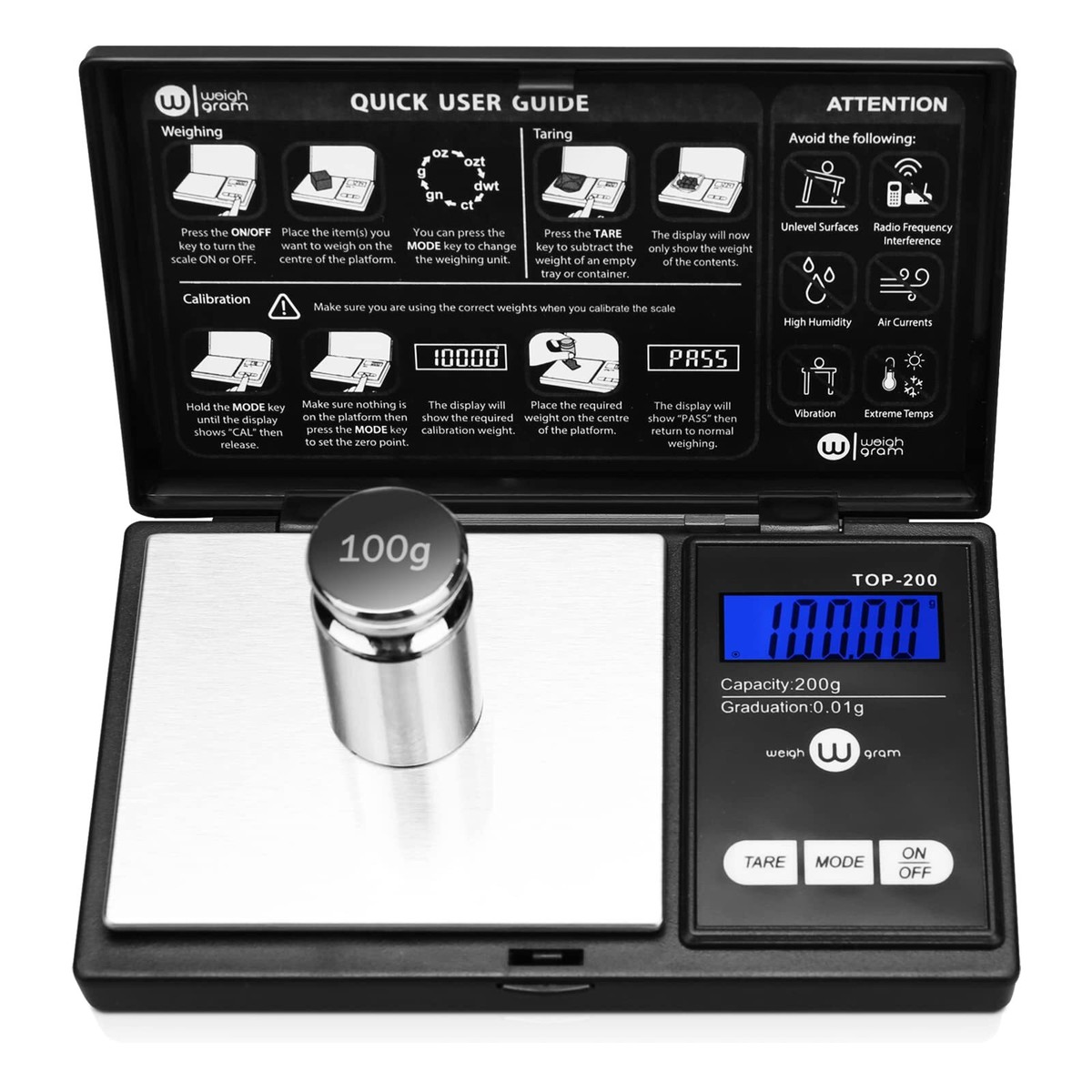
Weigh Gram 200 g × 0.01 g Scale — Mass Measurement
Compact weighing instrument useful as one part of a documented air-mass and immersion workflow. It does not itself calculate density.
Check exact listing on Amazon ↗
Amazon price, seller and stock may change.
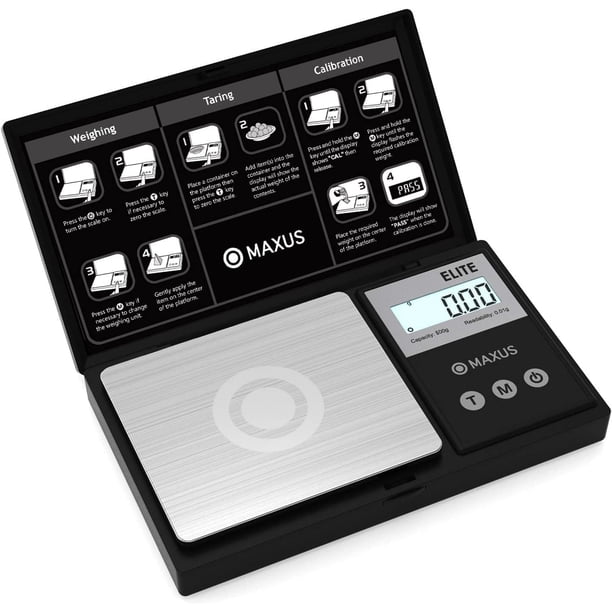
MAXUS 500 g × 0.01 g Scale — Larger Capacity
Extra maximum weight capacity; choose only if the required precision and calibration are adequate for your specimen.
Check exact listing on Amazon ↗
Amazon price, seller and stock may change.
Affiliate disclosure: As an Amazon Associate, USA Rockhounding earns from qualifying purchases. Confirm the exact variant, current price and seller before buying. These are model-matched product photographs, not independent hands-on reviews.
Choose a specific-gravity method that fits the specimen
Specific gravity compares a specimen’s density with the density of water. A hydrostatic weighing setup estimates it by comparing the specimen’s weight in air with its apparent weight while suspended in water. The specimen must be suitable for immersion: porous, friable, soluble or water-sensitive material can absorb liquid, shed grains or be damaged, making the result unreliable.
What matters more than a kit label
- Balance readability and repeatability: verify the usable mass range and how consistently repeated measurements agree.
- Suspension and vessel clearance: the sample must hang freely, without touching the sides or bottom of the container.
- Surface bubbles: trapped air changes the apparent submerged reading; textured specimens need particular care.
- Water conditions: temperature, contamination and surface effects influence precision, especially for small stones.
Interpreting your result
A measured value is supporting evidence, not proof of a mineral or gemstone’s identity. Different materials can overlap in density, and inclusions, cracks, mixed mineral grains, treatments and measurement error can shift a result. Record the specimen mass, repeated submerged measurements, water temperature and method so another person can reproduce the test.
If the stone cannot be immersed safely, select a non-immersion examination method instead of forcing a hydrostatic test. Cross-check the result with hardness, optical observations and geological context. For other testing approaches, use the mineral identification equipment guides.