Florida is the easiest state in the country to find fossil shark teeth. Millions of years of shallow seas left teeth in the sediments under much of the state, and waves and rivers wash them out every day. Venice on the Gulf Coast calls itself the shark tooth capital of the world.
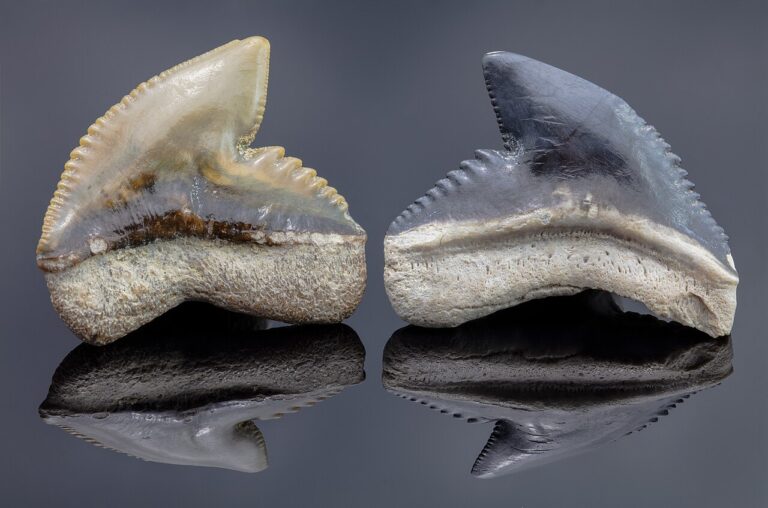

| Best beaches | Venice: Caspersen and Brohard beaches; Stump Pass; Fort Clinch |
|---|---|
| Best river | Peace River between Arcadia and Wauchula |
| Permit | None for shark and ray teeth; Florida Fossil Permit for other vertebrate fossils |
| Best time | Low tide and after storms; Peace River in the dry season, about November to May |
| What to bring | Long-handled sand sifter with a 1/4-inch screen |
| Not allowed | Collecting archaeological artifacts; digging banks on much public land |
The rule
Fossil shark and ray teeth, invertebrate fossils and plant fossils can be collected and kept by anyone on Florida state land without a permit. Other vertebrate fossils, such as bones and mammal teeth, need a Florida Fossil Permit from the Florida Museum of Natural History, and finds must be reported. Digging into banks is often prohibited on public land, and archaeological artifacts may never be collected.
Best beaches
- Venice and Brohard Beach and Caspersen Beach: sift the shell line where waves break.
- Stump Pass Beach State Park in Englewood.
- Fort Clinch State Park on Amelia Island in the northeast.
Rivers
The Peace River between Arcadia and Wauchula is famous for shark teeth, including megalodon, along with Ice Age fossils. Much of the riverbed is state land, so the permit rules above apply to anything other than shark teeth. Guided trips such as Paleo Discoveries handle access and teach screening. Go in the dry season, roughly November to May, when the river is low.
How to find them
- Use a long-handled sand sifter with a 1/4-inch screen in the surf zone.
- Look for small, shiny black or gray triangles in the shell line at low tide.
- After storms and in winter, more gravel is exposed.
Questions
Do you need a permit to collect shark teeth in Florida?
No. Fossil shark and ray teeth can be collected without a permit. Other vertebrate fossils from state land need a Florida Fossil Permit.
What is the best beach in Florida for shark teeth?
Venice, including Caspersen Beach and Brohard Beach, is the best known. Stump Pass Beach and Fort Clinch State Park are also good.
Where can you find megalodon teeth in Florida?
Most often in rivers such as the Peace River and offshore by divers. They are rare on beaches.
Back to the Florida rockhounding guide · Rules by land type
Official sources
- Florida Geological Survey: fossil-bearing formations and geologic maps for Florida.
- National Park Service fossil laws: fossils may not be collected in national parks.