Best Gemological Microscopes: Optics, Illumination & Working Space
Choose a gem microscope from optical quality, lighting method, working distance and serviceability rather than magnification claims alone.
Choose equipment from the material and job first—not from the retailer first.
What should you look for in a gemological microscope?
Prioritize stable stereo optics, useful working distance, controlled illumination such as darkfield where appropriate, and service/support. Magnification alone does not determine whether a microscope is useful for gemology.
A microscope is an observation instrument, not an identity button.
Its value comes from stable stereo viewing and controlled illumination for inclusions, surface features, treatments/workmanship clues and documentation.
Check the source, model and buying conditions.
Manufacturer pages and manuals support the specifications identified in a guide. Check the exact model and current instructions before purchase; similarly named variants can differ.
A product card’s check date applies to that record. The page revision date does not mean every product was rechecked. Confirm current price, seller, package contents and availability on Amazon.
These guides use published information and editorial selection criteria. Hands-on testing is not claimed unless a guide describes the actual test.
Shopping cards show products with a direct Amazon purchase link. This limits the displayed selection; it is not a comprehensive market comparison. Use the tool-class guidance and current manufacturer instructions to assess other options.
- Gesswein gemological tools
- Microscope Central gemological microscopes
These references support product specifications or procedures, not independent proof of performance. Follow the instructions for the exact equipment you use.
Editorial method: read the Gear Review Methodology & Evidence Policy. Affiliate relationships: read the disclosure.
Microscope alternatives and inspection tools
The photographed Carson models are compact field or bench inspection microscopes, not professional gemological stereo microscopes. They can help beginners inspect grains and inclusions, but may lack optical quality, stable staging, darkfield illumination and depth perception required for serious gem analysis.
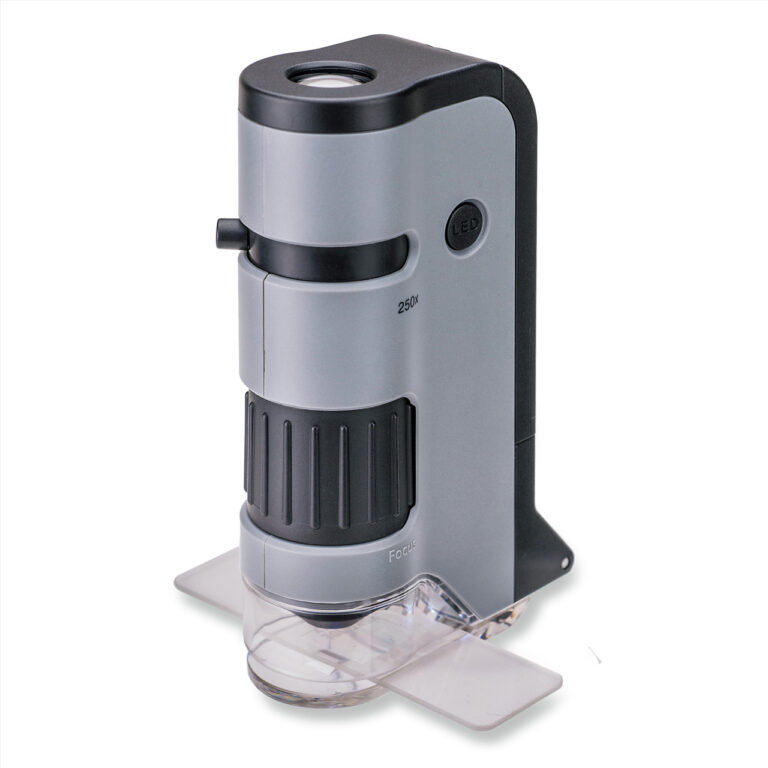
Carson MicroFlip MP-250BUN Microscope + 24-Slide Bundle
Best for: High-magnification 100–250x pocket microscopy with slide base, smartphone adapter and a prepared-slide collection.
Before buying: This ASIN is a bundled microscope-and-24-slides package; confirm the included phone adapter and slides.
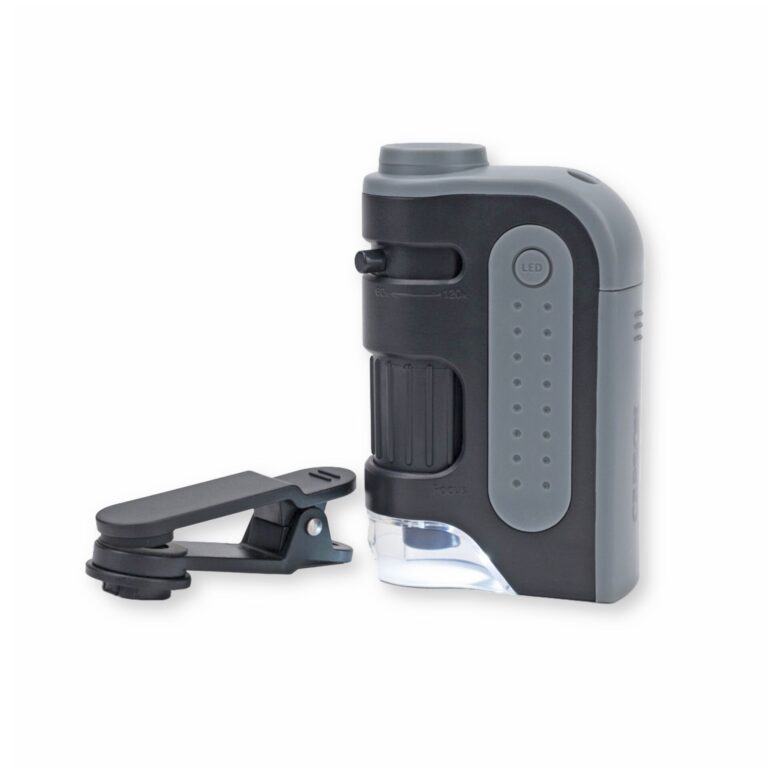
Carson MicroBrite Pro MM-350 Microscope with Smartphone Clip
Best for: Photographing mineral grains and texture at 60–120x using the included smartphone adapter clip.
Before buying: Phone alignment and compatible camera lenses vary; check battery and clip contents.
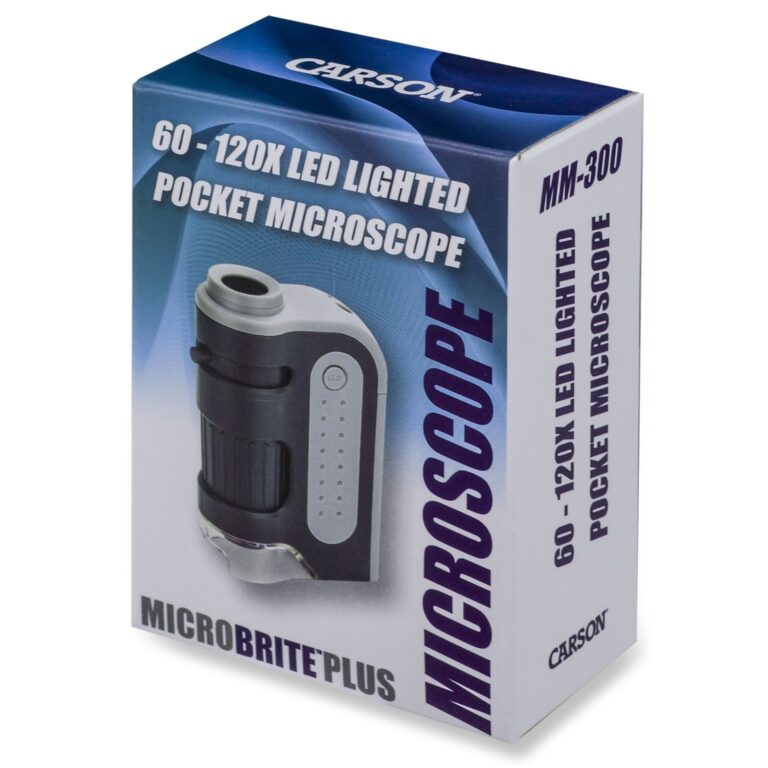
Carson MicroBrite Plus MM-300 Pocket Microscope
Best for: Inspecting small mineral features at 60–120× where a 10× loupe lacks magnification.
Before buying: Requires stable positioning and illumination; not a replacement for optical mineral identification tests.
Affiliate disclosure: As an Amazon Associate, USA Rockhounding earns from qualifying purchases. Confirm the specific product and current listing before purchase.
How to compare microscopes for gemstone examination
For inclusions, fractures, growth features and surface treatments, stable positioning and lighting control are often more valuable than a headline maximum magnification. A microscope that is awkward to focus or leaves too little room around the specimen can slow down routine inspection.
Match the optics and stand to your work
- Binocular viewing: comfortable, adjustable eyepieces and an appropriate working distance are important for extended examination.
- Illumination: transmitted, darkfield and reflected lighting reveal different features; check which modes are truly included rather than assumed.
- Specimen handling: evaluate holder stability, the ability to rotate the stone, stage clearance and whether focusing remains steady while moving it.
- Documentation: consider how you will capture photographs, label observations and return to the same feature later.
What a microscope cannot prove
Some inclusions support a gemological interpretation, but appearances can overlap between natural, laboratory-grown and treated materials. Magnification alone does not establish geographic origin, authenticity or treatment history. Record observed features separately from conclusions, and refer uncertain or high-value identification questions to a qualified laboratory.
Start with a repeatable lighting and observation routine using reference specimens. Clean optical surfaces following the manufacturer’s instructions and avoid forcing a stone holder against fragile gems. Compare complementary equipment in the refractometer guide and the mineral identification collection.
What counts as a gemological microscope?
A gemological microscope is designed to help an observer inspect stones in a controlled and reproducible way. Professional gemological stereo systems often use binocular viewing and lighting configurations suitable for examining inclusions, growth structures, fractures and surface features in faceted or rough gemstones. By contrast, a compact handheld microscope offers magnification but not necessarily the stable viewing geometry or specialized illumination needed for detailed gemology. The Carson devices pictured above are real observational tools, but they should not be mistaken for complete gemological stereo microscope workstations. Decide first whether you need educational mineral inspection, gem identification support, or photography of complex internal features.
Stereo microscopes and the value of depth perception
Stereo optics present slightly different views to each eye, helping an observer perceive the shape and position of features within a transparent gem or relief on a crystal. This is useful when distinguishing a surface scratch from an inclusion deeper inside a stone. A single-lens handheld pocket microscope may enlarge a feature but provide less depth context and less comfortable viewing over long sessions. Stereo capability by itself does not prove optical excellence; lens alignment, clear focus and illumination matter. For a collector who repeatedly handles small transparent stones, a stable binocular system can be more practical than chasing headline magnification numbers.
Magnification range: more is not always better
Many gemological inspections benefit from a useful range of modest magnifications and the ability to zoom in gradually. A very high-power image can contain less of the gemstone, have shallower focus and make it difficult to relocate a feature. Compare true optical magnification with electronic image enlargement, which does not recover detail that the lens failed to resolve. An advertised 60× pocket unit and a quality stereo microscope at a lower setting are not equivalent instruments. A versatile system should reveal the whole stone for orientation, then provide clear detail where questions arise. Controlled lighting often improves useful information more than another increase in nominal magnification.
Working distance and specimen clearance
Working distance is the space between the objective optics and the specimen when focused. Sufficient clearance makes it easier to rotate a faceted stone, use a gem holder, adjust a light or inspect a protruding rough crystal safely. Pocket microscopes often have short working distances and require close positioning. A bench gemological system may provide a more stable platform for viewing from different directions. Verify actual working distance at the magnifications you intend to use, not just the maximum distance quoted in the product listing. For fragile mineral specimens, avoid moving the lens directly into the crystal to force a sharp focus.
Brightfield, darkfield and oblique illumination
Lighting configuration changes what is visible in a gemstone. Brightfield illumination can help reveal transmitted features under some conditions, while darkfield can make certain inclusions stand out against a darker background. Oblique illumination from the side may highlight growth zones, surface-reaching fractures or relief on rough crystals. Not every model includes a true gemological darkfield base; a handheld LED shining sideways is not automatically equivalent. When comparing products, inspect which illumination modes are native, which require accessories and how comfortably the specimen can be repositioned. Different stones and inclusion types need different lighting approaches, so a single fixed lamp may become limiting.
Reflected light versus transmitted light
Opaque minerals and surface textures are often better studied with reflected light because illumination cannot pass through the specimen. Transparent and translucent stones can also benefit from transmitted illumination when internal features are of interest. A microscope for both rough rocks and faceted gems should offer a lighting arrangement suited to the relevant material. A pocket device with built-in illumination may be useful on a field trip, but it might wash out surfaces or fail to show deeper inclusions. Test a known clear stone, an opaque grain and a reflective crystal when assessing a candidate system. Their differing appearance reveals whether the light configuration is versatile enough.
Gem holders, tweezers and stage stability
Small polished gems are difficult to inspect when they roll or rotate unexpectedly. A suitable stone holder or clean, secure gripping method lets the observer adjust orientation without dropping a valuable item. A stable microscope base reduces shaking, which becomes particularly noticeable at higher magnification. Use soft handling tools and avoid excessive clamp pressure on delicate stones. A system that provides good optics but awkward working access can be frustrating. For frequent serious inspection, ergonomics and stable handling may justify the added expense of a bench unit over a handheld device, even when the portable model produces striking demonstration photographs.
Inspecting inclusions without overclaiming origin
Needles, crystals, fluid-like features and fractures may provide clues about mineral formation or past treatment. However, a photograph of an inclusion does not by itself certify a gemstone’s natural origin, identify its species or establish the absence of treatment. Similar-looking textures can arise in different minerals, and some treatments require specialist analysis to detect. Document the viewing direction, lighting and approximate magnification when recording an unusual internal structure. If a stone’s identity or value has major financial consequences, use a qualified laboratory or professional gemologist rather than interpreting microscope appearance alone. A tool’s magnification is not a certification service.
How optical aberrations affect identification
Poor optics can create colored fringes, field distortion or a soft image away from the center. These effects make it harder to judge delicate crystal edges, fine inclusions or transparent layers. Compare clarity across a known specimen under controlled light and note whether the focus drifts or edges distort as the sample moves. The most useful view is not necessarily the highest magnification. A stable well-lit optical system with manageable aberrations can reveal more reliable information than a shaky high-power digital gadget. Listings should disclose optical construction and intended use instead of relying only on a single maximum magnification figure.
Digital cameras, adapters and recording images
A digital microscope or an eyepiece camera can help share observations, but good documentation requires stable alignment, appropriate exposure and a clear scale. A smartphone clip may introduce vignetting or focus problems depending on camera lens geometry. A dedicated trinocular arrangement can be useful for frequent photography, yet camera connectivity adds cost and does not automatically improve what the optical system can resolve. Record at least the specimen identifier, viewing direction, illumination method and approximate field dimensions. Resist software sharpening or AI processing that creates apparent detail not present in the original image. Preserve originals when documentation may be used for research or formal assessment.
The photographed Carson models: what they are actually good at
Carson MicroBrite and MicroFlip devices are compact microscopes with different viewing and recording conveniences. They may suit checking grain texture, small opaque inclusions visible at the surface, classroom samples and occasional field observations. Their strengths are portability and low setup demand, not specialized darkfield gemological inspection. An operator may struggle to inspect a deep inclusion through a complex faceted gemstone without the right illumination and stable position. The page’s photographed cards should therefore be considered introductory inspection alternatives. Before ordering one, verify the exact bundle contents, illumination source, power arrangements and any phone-adapter compatibility.
How to compare genuine bench gemological microscopes
For a dedicated stereo microscope, compare optical clarity, zoom range, eyepiece comfort, working distance, available darkfield and brightfield illumination, transmitted-light control, stone holder and accessory service support. Ensure the lamp is replaceable and that the stand allows comfortable viewing at a real desk. Check whether camera ports, polarization accessories or auxiliary illuminators are included or optional. Read exact model specifications rather than broad claims about professional-grade use. A substantial bench instrument may also require more storage, maintenance and careful handling. Consider how many inspections you complete each week before choosing a costly configuration.
Polarized illumination and strain patterns
Crossed polarizers can help reveal certain optical effects in some gemstones, but interpreting the results requires knowledge and suitable equipment. A clip-on polarizing film placed in front of a lamp is not equivalent to a calibrated gemological instrument with a complete optical pathway. Different stones behave differently, and strong reflections or misalignment can lead to confusing observations. Treat polarization as an additional method that may support a broader assessment rather than a shortcut for identifying every mineral. Where you need to establish crystal properties or authenticity, use complementary instruments and established reference procedures rather than trusting a single dramatic colored image.
Maintenance for field and laboratory optics
Store microscopes away from grit, moisture and large changes in temperature. Loose dust should be removed gently using appropriate optical-cleaning tools before wiping lenses. Do not spray liquid directly into eyepiece housings, lamp compartments or electronics. Keep specimen holders free from abrasive particles that could scratch polished surfaces. A compact handheld device may tolerate ordinary travel but should still be carried in a protective case rather than loose among rock hammers. For bench microscopes, cover the system when not in use and follow manufacturer lamp, stage and optical alignment instructions. A dirty lens or failing light can undermine even good optical construction.
How to practice with inexpensive known samples
Begin with common, clearly labeled specimens so you know what kinds of structures you expect to see. Compare one transparent quartz sample, a dark opaque mineral and a visibly fractured piece under similar lighting. Look for surface textures first, then alter the light and viewing angle to explore internal details. Make sketches before photographing, since drawing encourages close observation and reveals uncertainty. Avoid making destructive scratches or heating unknown samples merely to confirm a hypothesis. Learning to control lighting and recognize artifacts is a better initial investment than an expensive microscope bought before any observation practice.
When to use a loupe, pocket microscope or professional system
A 10× loupe remains a strong field choice for scanning many specimens quickly. A pocket microscope can help examine tiny grains when there is time for controlled positioning and illumination. A genuine stereo gemological bench microscope is more appropriate for recurring close inspection of polished gems and internal features, particularly if darkfield and specimen manipulation are important. Each occupies a distinct workflow rather than a simple good-better-best ranking. Combine microscopy with hardness, refractive index or specific-gravity testing only where safe and methodologically appropriate. No visual tool makes a hazardous sample safe to handle or confirms mineral identity unaided.
Final buying checklist and relevant guides
List the specimen types, required working distance, viewing frequency, desired illumination, photography needs, bench space and total budget. Confirm the real magnification range and whether accessories shown in photographs are actually supplied. Buy from a seller that identifies the precise model and provides instructions and replacement support. If the intended task is professional gemstone assessment, seek a true gemological microscope rather than a pocket magnifier marketed with large numbers. See the loupe guide, refractometer basics and mineral testing kits for complementary methods.
Pocket microscope purchasing option: standalone Carson MicroFlip MP-250
When examining grains, crystal habits and surface textures, distinguish a portable microscope from a bench gemological stereo microscope. A handheld unit helps with field observations, but it does not provide the working distance, lighting geometry or optical features needed for professional gemstone grading.
Carson MicroFlip MP-250 — Single-Microscope Package
Best for: Portable close inspection of prepared small specimens, grains and fine textures. Carson specifies variable 100×–250× magnification, LED illumination, a UV light, a flip-down slide base, a smartphone digiscoping clip, and one AA battery (not included).
Which package? This ASIN is the standalone MP-250 package, not the MP-250BUN package with 24 prepared slides or the MP-250MU multi-unit pack. Compare the total contents and per-unit cost before choosing. A 10× loupe is often faster for routine field screening; the MicroFlip requires close positioning and focus adjustment. Its built-in UV light is not a dedicated mineral-fluorescence lamp.
Before buying: Verify the listing is the single MP-250 with clip, starter slide and wrist strap; check seller, included accessories and availability. Published specifications are not independent optical tests.
View standalone MP-250 on Amazon ↗
ASIN B015MS8O48 · Local image #39891 · Seller, price and stock can change.
Affiliate disclosure: As an Amazon Associate, USA Rockhounding earns from qualifying purchases. Product guidance is based on published specifications and model identification.