Best Mineral Identification Kits: Start With Measurable Properties
A useful mineral-ID kit helps observe and test properties; it should never promise automatic identification from appearance alone.
Choose equipment from the material and job first—not from the retailer first.
What is the best mineral identification kit?
The best starter kit supports observation plus repeatable property tests without encouraging unnecessary damage. Begin with magnification and field observations, add hardness only when a controlled scratch is acceptable, and use density/optical tools for unresolved specimens.
Observation first, destructive tests only when justified.
Use a loupe and non-destructive observations first. Add hardness only when the specimen can tolerate a scratch test, then use density or optical measurements to narrow ambiguous candidates.
Source-verified mineral identification starter kit
Dancing Bear Rock, Mineral & Geode Treasure Hunt Kit
Best for: Beginner rock and mineral exploration, sorting and identification activities
- Capacity/class
- Rock/mineral/geode kit
- Power
- Manual
- Availability
- Check Amazon for current availability
- Exact model/ASIN is mapped to the relevant Gear Hub workflow
- Direct Amazon purchase path is separated from editorial recommendation logic
- Confirm the exact current variant, included accessories and seller on Amazon before purchase
- Amazon price and availability can change at any time
Check the source, model and buying conditions.
Manufacturer pages and manuals support the specifications identified in a guide. Check the exact model and current instructions before purchase; similarly named variants can differ.
A product card’s check date applies to that record. The page revision date does not mean every product was rechecked. Confirm current price, seller, package contents and availability on Amazon.
These guides use published information and editorial selection criteria. Hands-on testing is not claimed unless a guide describes the actual test.
Shopping cards show products with a direct Amazon purchase link. This limits the displayed selection; it is not a comprehensive market comparison. Use the tool-class guidance and current manufacturer instructions to assess other options.
- Mineralab mineral identification tools
These references support product specifications or procedures, not independent proof of performance. Follow the instructions for the exact equipment you use.
Editorial method: read the Gear Review Methodology & Evidence Policy. Affiliate relationships: read the disclosure.
Three additional mineral-identification tools: high magnification and UV fluorescence
Starter educational mineral collections differ from measuring and observation tools. Pocket microscopes are helpful for examining surface textures; longwave UV may reveal fluorescent minerals but does not identify a specimen conclusively.
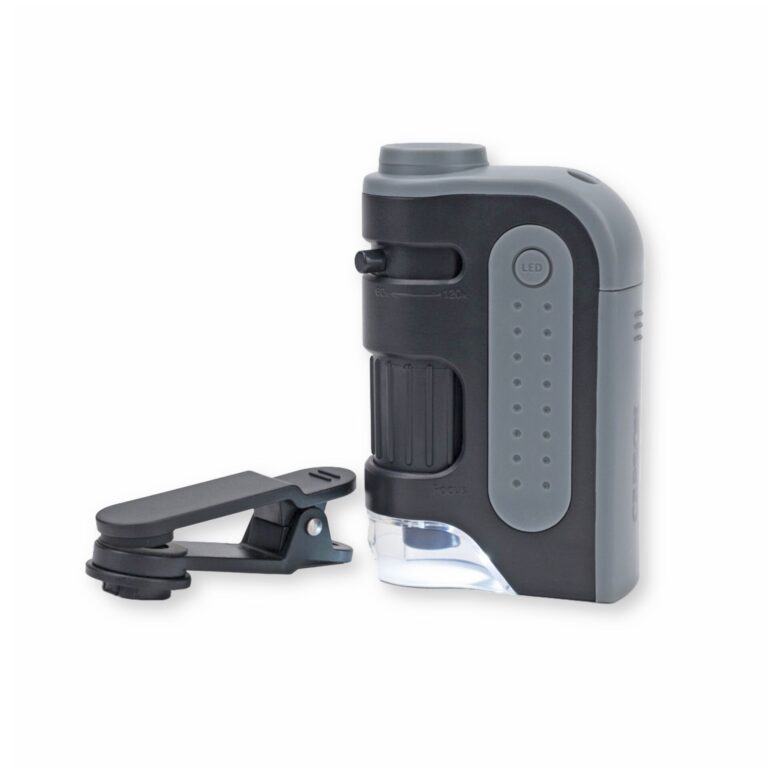
Carson MicroBrite Pro MM-350 Microscope with Smartphone Clip
Purpose: Photographing mineral grains and texture at 60–120x using the included smartphone adapter clip.
Before buying: Phone alignment and compatible camera lenses vary; check battery and clip contents.
Confirm current price, package and seller at Amazon.
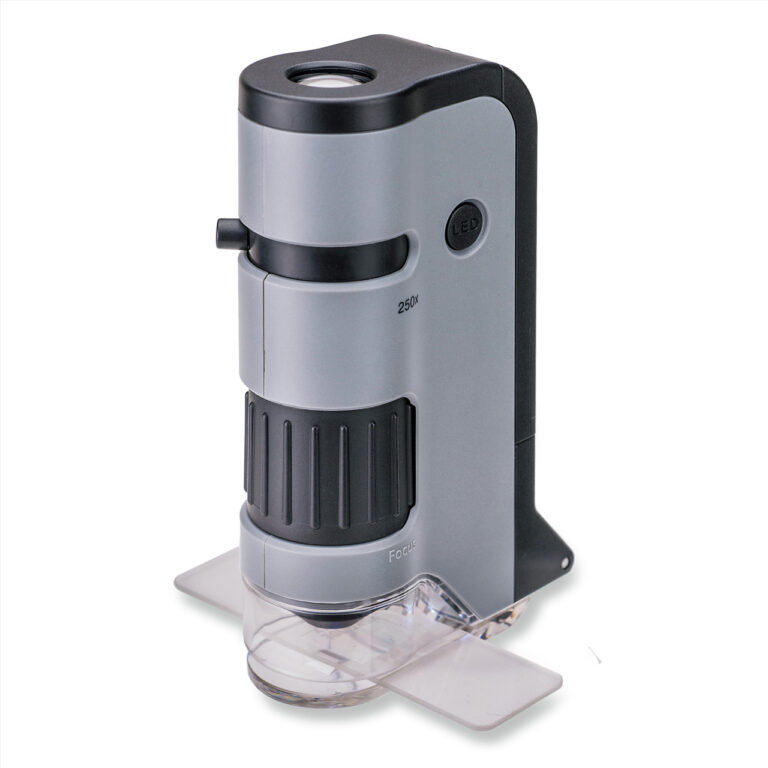
Carson MicroFlip MP-250BUN Microscope + 24-Slide Bundle
Purpose: High-magnification 100–250x pocket microscopy with slide base, smartphone adapter and a prepared-slide collection.
Before buying: This ASIN is a bundled microscope-and-24-slides package; confirm the included phone adapter and slides.
Confirm current price, package and seller at Amazon.
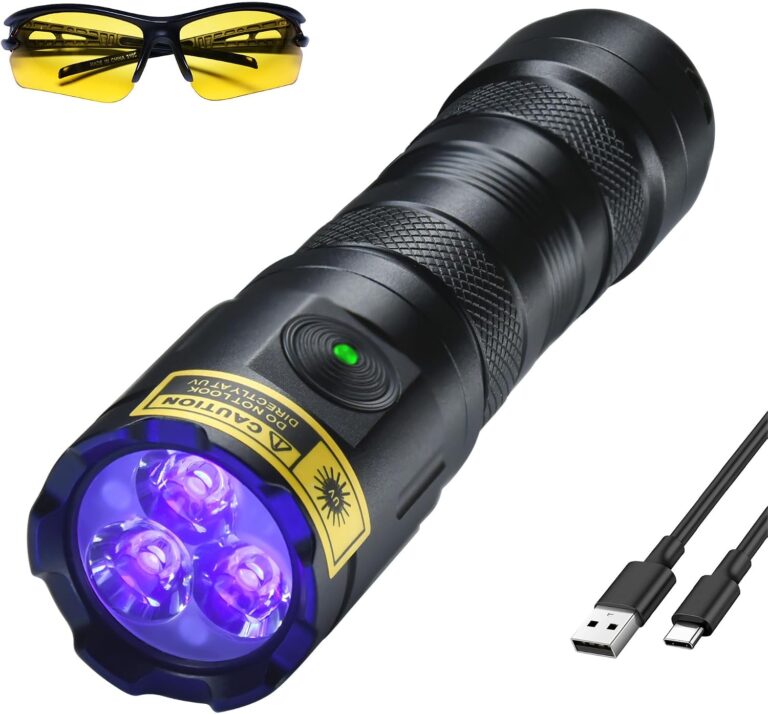
DARKBEAM 365nm Filtered UV Flashlight
Purpose: Longwave UV fluorescence scouting on rock and mineral specimens.
Before buying: Wear UV-rated eye protection; not suitable for shortwave-only minerals.
Confirm current price, package and seller at Amazon.
Field decision: Use appropriate UV-rated protective eyewear; 365 nm longwave UV is not a shortwave mineral lamp. These microscopes do not replace refractive-index or hardness measurements.
As an Amazon Associate, USA Rockhounding earns from qualifying purchases. These recommendations reuse exact-model photographs already stored in the site’s Media Library; hands-on testing is not claimed.
Compare mineral identification kits and observation tools
A geology activity kit and a geode discovery set are not interchangeable with a field loupe or digital microscope. Choose a product for learning specimens, opening geodes, or closely examining mineral surfaces.
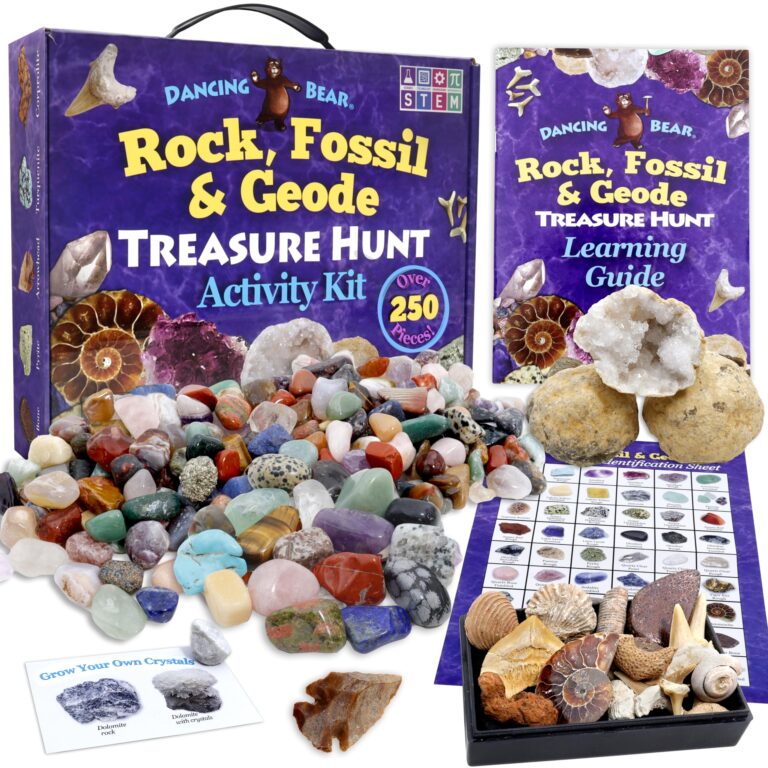
Dancing Bear Rock, Mineral & Geode Treasure Hunt Kit
Best for: Beginner rock and mineral exploration, sorting and identification activities
Before buying: Confirm the exact current variant, included accessories and seller on Amazon before purchase
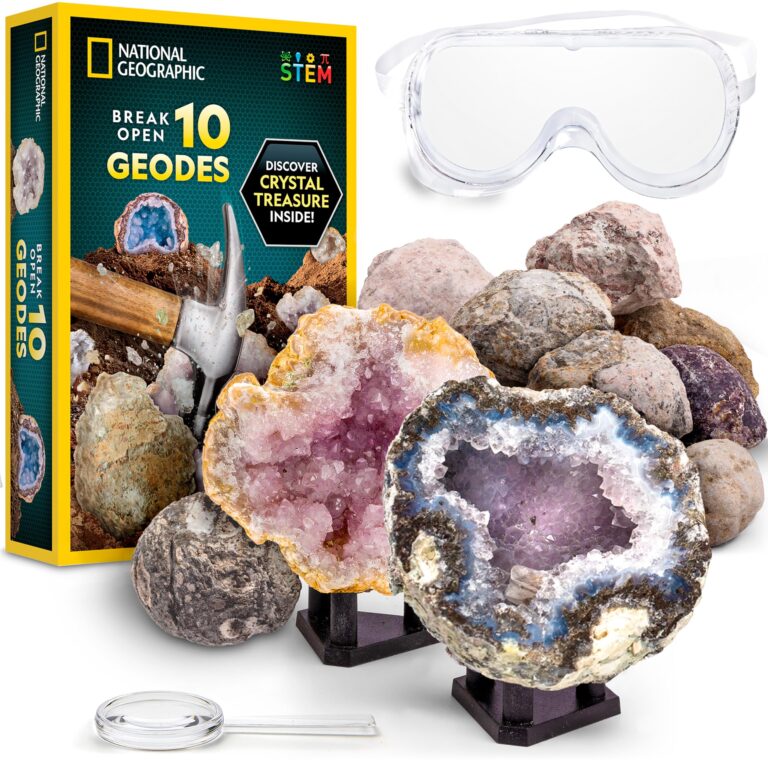
National Geographic Break Open 10 Premium Geodes Kit
Best for: Family geology exploration with ten unbroken geodes and basic discovery accessories.
Before buying: Adult supervision and impact-rated safety glasses required; check geode count and tools in the offered kit.

BelOMO 10x Triplet Loupe
Best for: Checking mineral grains, crystal faces and inclusions with an achromatic 10× triplet lens.
Before buying: Confirm a genuine BelOMO LP-3-10x and the desired protective case.
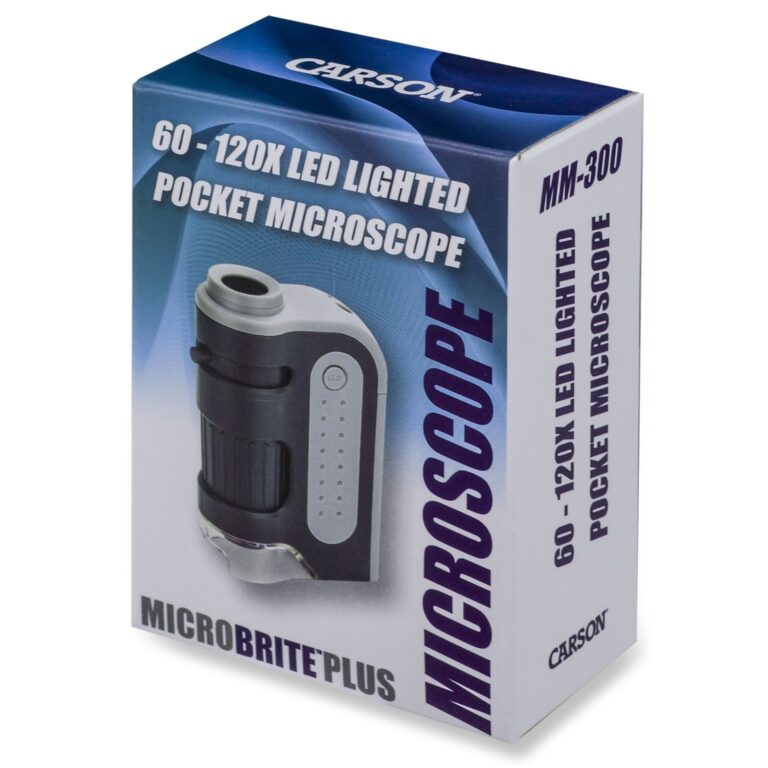
Carson MicroBrite Plus MM-300 Pocket Microscope
Best for: Inspecting small mineral features at 60–120× where a 10× loupe lacks magnification.
Before buying: Requires stable positioning and illumination; not a replacement for optical mineral identification tests.
Affiliate disclosure: As an Amazon Associate, USA Rockhounding earns from qualifying purchases. Product listings, sellers, prices and availability may change; confirm the exact item on Amazon.
Build a mineral identification kit around the tests you can actually interpret
A useful field kit does not identify every unknown stone with one gadget. It supports a repeatable observation sequence: document colour and crystal habit, check streak only when it is safe, compare relative hardness and record the geological setting. Distinguish a screening result from a laboratory confirmation, especially for valuable or potentially hazardous material.
Essential components and why they matter
- 10× loupe: Check crystal faces, cleavage, grain boundaries and surface coatings under good light.
- Streak plate: Use on a small, non-valuable sample, recognizing that minerals harder than the plate will scratch it instead of leaving a useful streak.
- Hardness points: Check against reference minerals or calibrated picks with light pressure, avoiding polished gemstones and fragile crystals.
- Magnet and scale: Record additional clues but do not treat magnetic attraction or weight alone as a definitive identification.
- Notebook and specimen bags: Keep locality, collection permission and observed test results attached to the correct sample.
Choose for beginner, field, or workshop use
Beginners benefit more from clear reference specimens and instructions than from a large assortment of unidentified tools. Field collectors should prioritize a compact, rugged set; workshop users can add a measured specific-gravity setup or microscope. Never scratch a valuable specimen simply to complete a checklist. If tests remain ambiguous, record the uncertainty and use professional identification when the result matters. See hardness-kit guidance for the limits of Mohs testing.
Mineral identification: the sequence your kit should support
A mineral kit is most useful when it helps answer one question at a time. Begin by deciding whether the sample is a single mineral, a rock containing several visible minerals, or a manufactured material. A banded aggregate, for example, may have several constituent grains with different properties. A scratch on one grain cannot be used to identify the entire rock. Photograph a dry, unmodified surface with a scale, note the find context, and list two or three plausible possibilities. A good field kit makes these observations reproducible without depending on misleading color labels or an advertising claim that any one instrument identifies everything.
Step 1: Observe without damaging the specimen
Look first at luster: metallic, glassy, pearly, resinous, earthy or waxy reflections are more informative than the color of the rock in a shadow. Inspect well-lit surfaces and freshly exposed edges only when those edges already exist. Note whether crystals form cubes, six-sided prisms, flat plates, needles or an irregular granular mass. Record whether the specimen is opaque, translucent at thin edges, or transparent. A 10× loupe is sufficient for many first-pass observations; stronger magnification may be useful for textures but can restrict field of view and working distance. Keep dust and fingerprints off the lens rather than purchasing magnification on its headline number alone.
Step 2: Document cleavage and fracture
Cleavage describes preferential breaking along structural planes. Fracture describes breakage away from those planes; quartz often shows curved, shell-like fracture surfaces. Flat reflective faces can also result from crystal growth or weathering, so do not label every shiny plane as cleavage. Examine multiple surfaces and estimate whether repeated directions are present. A loupe and small light are generally more valuable for this task than aggressive sampling tools. Do not split a rare, fragile or valuable specimen to create a fresh surface. Photographs under different angles are a safer permanent record than a destructive breakage test.
Step 3: Bracket hardness carefully
Mohs hardness is a comparative scratch-resistance scale, not a measure of toughness or impact strength. Reference minerals can bracket an unknown: if a sample scratches one standard but is scratched by a harder standard, its relative hardness falls between them. Check for a real groove rather than a line of transferred powder. Use a small inconspicuous area and clean the test surface before interpreting it. Familiar references include gypsum around Mohs 2, calcite around 3, feldspar around 6 and quartz around 7. Actual hardness picks and test plates vary, so use documented standards and do not apply excessive force.
Step 4: Use streak selectively
A streak test observes the powdered color left on an unglazed porcelain plate. It can distinguish some opaque metallic minerals even when surface color varies due to tarnish or oxidation. Hematite frequently produces a reddish-brown streak, whereas magnetite usually produces a dark streak. Some hard minerals simply scratch the plate and yield little useful powder, so absence of a good streak is not evidence that the sample is synthetic. Never test an unknown with a suspected toxic coating or friable hazardous dust unless suitable professional controls are in place. Clean or replace plates to prevent previous results contaminating the next sample.
Identification tools compared by evidence value
Loupe: Supports observation of grain texture, crystal habit and small cleavage surfaces; requires clean optics and adequate light. Streak plate: Useful for selected minerals that leave diagnostic powder; can damage both plate and specimen. Hardness picks or standards: Provide bounded comparisons if correctly applied; unsuitable for prized polished stones. Strong magnet: Can detect attraction but does not alone identify magnetite or exclude other magnetic material. Digital scale: Aids weight recording and specific-gravity work if precision and capacity are suitable. Reference collection: Especially valuable when labels and provenance are reliable; poor-quality examples can teach the wrong visual cues.
Why a magnifying glass is not a microscope
A hand loupe may show crystal surfaces and coarse grains but not tiny inclusions or decisive microscopic textures. Gemological microscopes can illuminate and magnify internal features, yet they are not automatic mineral analyzers. A bench instrument also requires stable support, lighting, cleaning and a clear sampling plan. For first-time collectors, improved illumination and a reliable reference set will usually answer more routine field questions than a high-cost microscope purchased without training. When a question concerns natural versus synthetic origin, treatment or commercial authenticity, specialist examination and appropriate laboratory testing may be necessary.
Specific gravity: useful, but not infallible
Specific gravity compares a substance’s density with water at a stated reference condition. In principle, careful weighing in air and suspended in water can estimate it for a suitable solid specimen. In practice, cracks, pores, attached matrix, air bubbles, poorly controlled suspension and uncertain scale precision all introduce error. A composite rock does not necessarily have the density of its most interesting mineral grain. Avoid immersing samples that may dissolve, react with water or be damaged by wetting. If hydrostatic testing is central to your work, use a suitable scale, fixture and documented procedure rather than assuming a pocket balance is enough.
Build three distinct kit configurations
Starter kit for school and beginner practice
Select a readable identification key, labeled common mineral specimens, 10× loupe, clean streak plate, inexpensive light, notebook and an appropriate basic hardness reference. The object is to learn repeated observation rather than to collect gadgets. Practice on known samples before investigating unknown ones. Include a small collection tray so glassy fragments, chips and equipment do not roll off a desk. If children are involved, exclude dangerous specimens and supervise any scratch testing. A starter kit should enable the learner to say “probably quartz, pending other tests” rather than produce unjustified certainty from a single shiny surface.
Travel kit for outdoor locality work
Keep the field version compact and weather-resistant. Include a loupe on a secure strap, small notebook, pencil, photo scale, sample labels and sturdy containers; add permitted testing tools only when field conditions justify them. Record the exact location privately where appropriate and distinguish a named geological locality from an authorized collecting area. Dust, rain and uneven surfaces can undermine delicate measurements. Save more precise density measurements for a controlled workbench. Before collecting, confirm the land manager’s rules, specimen limits and whether historic, fossil or archaeological material receives special protections.
Workshop kit for intermediate specimen examination
A controlled bench can accommodate dedicated lighting, magnification, stable scales, reference mineral sets and safely stored test materials. Separate observation from any grinding or cutting operation to prevent dust entering optical equipment. Establish individual trays and accession numbers so identification records are not accidentally assigned to the wrong stone. Keep a list of calibration checks and instrument limitations. For rare or potentially valuable specimens, favor non-destructive examination first. It is often less expensive to consult a qualified laboratory once than to buy and maintain specialized instruments for a single uncertain sample.
Distinguish common look-alikes without a misleading shortcut
Quartz and calcite may both appear pale or glassy, but they differ substantially in hardness and typical fracture or cleavage. Quartz resists scratching by common steel and is much harder than calcite; calcite commonly shows recognizable cleavage and can react to weak acid when the test is suitable. An acid reaction is not an appropriate universal home-field test: it can damage samples and creates handling and disposal issues. Pyrite and chalcopyrite may both look brassy, but their hardness, streak and surface characteristics differ. A visual guess should remain a hypothesis until several independent properties agree.
Black minerals present another common difficulty. Magnetite, dark hematite, manganese oxides and many silicate-rich rocks can all look similar in photographs. Test magnetic attraction, streak and other observed properties in combination rather than calling every black magnetic stone magnetite. A dense, lead-gray metallic mineral could be galena, which contains lead and deserves careful handling. Do not lick, grind or handle suspected hazardous specimens casually. Fibrous, dusty, arsenic-bearing or radioactive material can require specialist procedures. In such cases the safest kit component may be a clear container and a decision not to test the material personally.
How to record an identification that another person can evaluate
Use a consistent specimen number. Record the date, permitted locality context, sample size, visual appearance, luster, any observed crystal form, fracture or cleavage, hardness evidence, streak result and magnetic response. Include the type of instrument and the result that actually occurred, not just the mineral name you expected. For instance, note that an unknown scratched a reference plate but left no observable powder instead of treating the event as a diagnostic white streak. Photograph the tested region. If several observations conflict with a proposed identification, keep alternative candidates and mark the result unresolved.
What to avoid when buying a large all-in-one kit
Some listings count every sample bag, unlabeled stone chip and disposable item as a separate identification tool. Compare usable standards, material quality and instructions rather than item count. Ask whether hardness references are identifiable, whether the included loupes are optically clear, whether a mineral chart provides actual property ranges and whether replacement accessories are sold. Promotional claims of “identify any crystal instantly” are not a substitute for mineralogical evidence. Also distinguish a children’s geology activity set from a professional test kit; both have value, but their accuracy, durability and learning goals are different.
When to stop testing and request expert help
Stop when the test risks destroying a valuable surface, releasing hazardous dust or producing evidence that your equipment cannot interpret. A mineralogical laboratory may use optical, spectroscopic, chemical or diffraction techniques depending on the question; the correct method depends on sample type and the claim being evaluated. Gem origin, treatment and value involve additional standards beyond ordinary field identification. A qualified professional can help determine which questions can be answered without sacrificing the sample. For the next step in tool selection, compare the microscopy guide, precision scales and Mohs testing kits.
Carson MicroBrite Plus MM-300 + MM-310 phone clip — specimen documentation kit
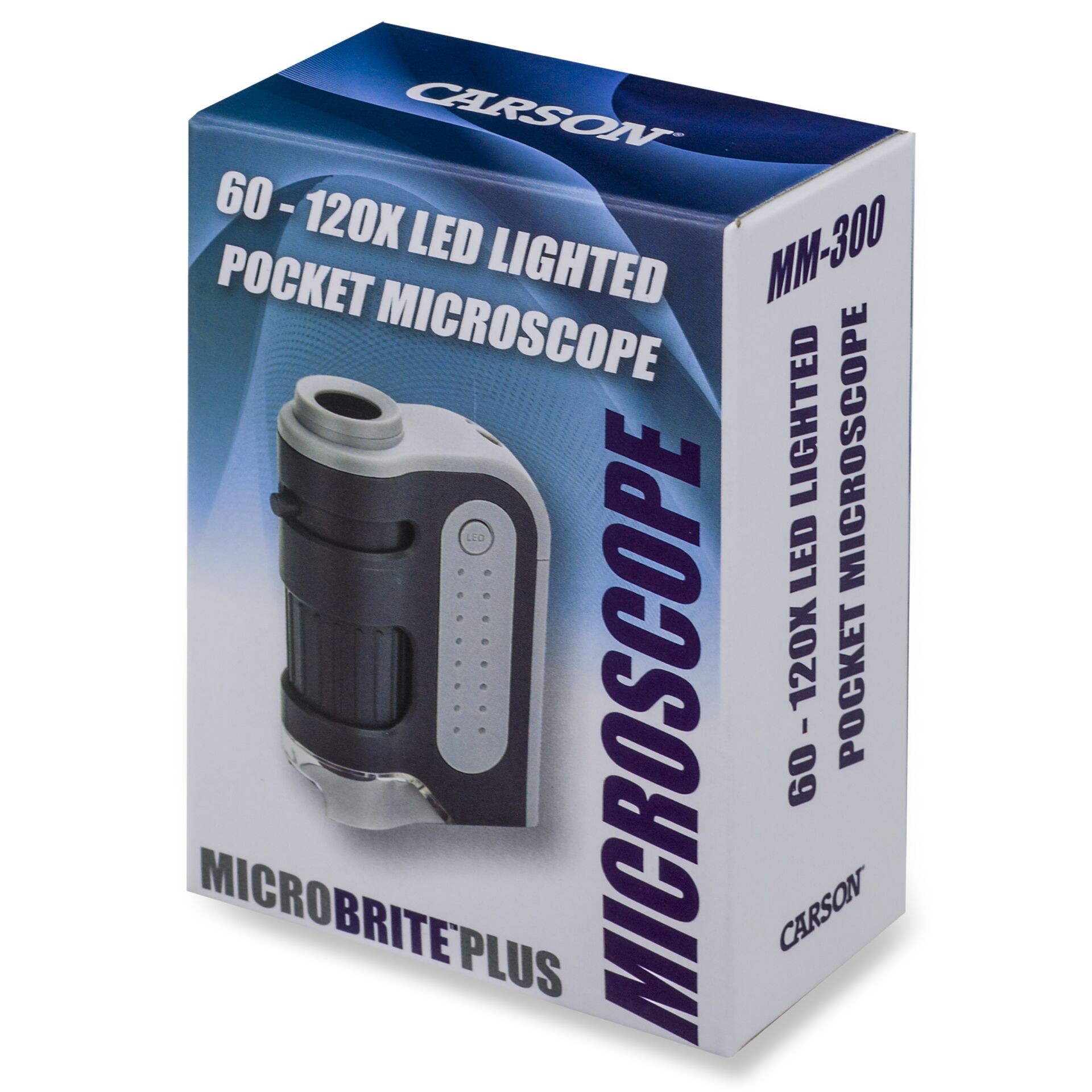
Exact Amazon package: ASIN B0CN3TRW5Q is a Carson MicroBrite microscope and phone-clip bundle described as MM-300 + MM-310. The clip is designed to align a smartphone camera with the microscope eyepiece for images of small grains, crystal faces or specimen textures; phone fit and alignment can vary.
Manufacturer specifications: Carson documents 60×–120× optical magnification, LED illumination, adjustable focus and operation on one AA battery for the MM-300. The microscope is intended for close-up inspection with the objective near the sample. Magnification alone does not establish a mineral species, chemical composition, gem authenticity or safety of unknown dust.
Buyer comparison: The MM-300-only listing (ASIN B00LAX52IQ) already on this guide is preferable when you do not need phone imaging. This MM-300 + MM-310 combination adds a photography workflow but does not increase optical resolution. A 10× triplet loupe remains more convenient for quick whole-specimen inspection, while a benchtop stereo microscope offers greater working space for delicate preparation.
Before buying: Check exact inclusion of MM-310, phone-camera alignment, batteries and returns. For dusty or friable specimens, avoid rubbing the objective into the sample; do not use a handheld microscope to inspect suspected hazardous powders. No personal test, price or availability claim is made. Carson MM-300 manual.
View exact MM-300 + MM-310 kit on Amazon
Affiliate disclosure: As an Amazon Associate, USA Rockhounding earns from qualifying purchases.
Carson MicroBrite Plus MM-300MU — four-pack for group specimen inspection
Exact pack: Amazon ASIN B00X5TNSCA is identified as Carson’s MM-300MU set of four MicroBrite Plus pocket microscopes. Carson’s MM-300 manual specifies 60×–120× adjustable magnification, LED illumination, close-range focus and one AA battery per microscope (not supplied). Check the four-unit count and package code before purchase.
Compare: The single MM-300 (ASIN B00LAX52IQ) suits one collector. This four-pack can equip a school mineral-identification group or multiple field kits without sharing one instrument. The MM-300 plus phone-clip package (B0CN3TRW5Q) serves a different need: smartphone specimen photography. A 10× triplet loupe is quicker for examining larger crystal faces; higher magnification does not prove a mineral’s identity.
Practical limits: Place the objective near a clean specimen; loose abrasive dust can damage optics. The microscope is not a substitute for streak, hardness, specific gravity or other mineral tests. No hands-on evaluation, price or availability claim is made.
View MM-300MU four-pack on Amazon
Affiliate disclosure: As an Amazon Associate, USA Rockhounding earns from qualifying purchases. Carson MM-300 manufacturer’s manual.
Carson MicroFlip MP-250MU four-microscope classroom pack
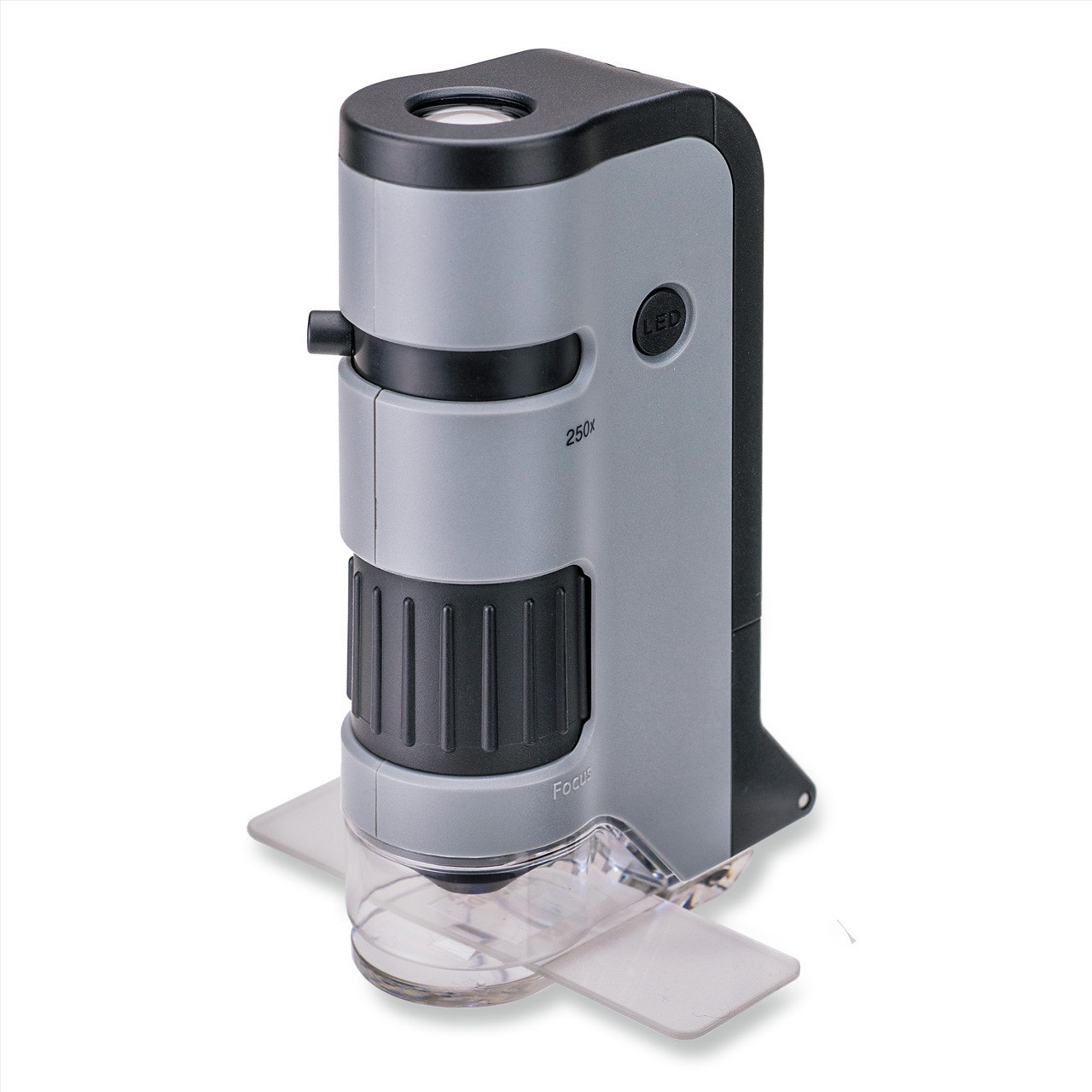
The MP-250 MicroFlip is a 100×–250× pocket microscope with LED illumination, a separate UV light, a flip-down slide base and a smartphone adapter clip. This ASIN identifies the MP-250MU set of four instruments rather than a single microscope. The photograph shows one exact MP-250 unit, not all four.
Buyer comparison: Choose the existing single MP-250 for one field kit or the MP-250MU set when multiple students need separate instruments. Compared with the MM-300 four-pack, the MP-250 offers a higher stated magnification range and a slide base, but high magnification does not replace hardness, streak or specific-gravity tests. Confirm the seller’s pack contents and accessories.
View exact configuration on Amazon
Affiliate disclosure: As an Amazon Associate, USA Rockhounding earns from qualifying purchases. No current price, stock, seller condition or hands-on test is claimed.